
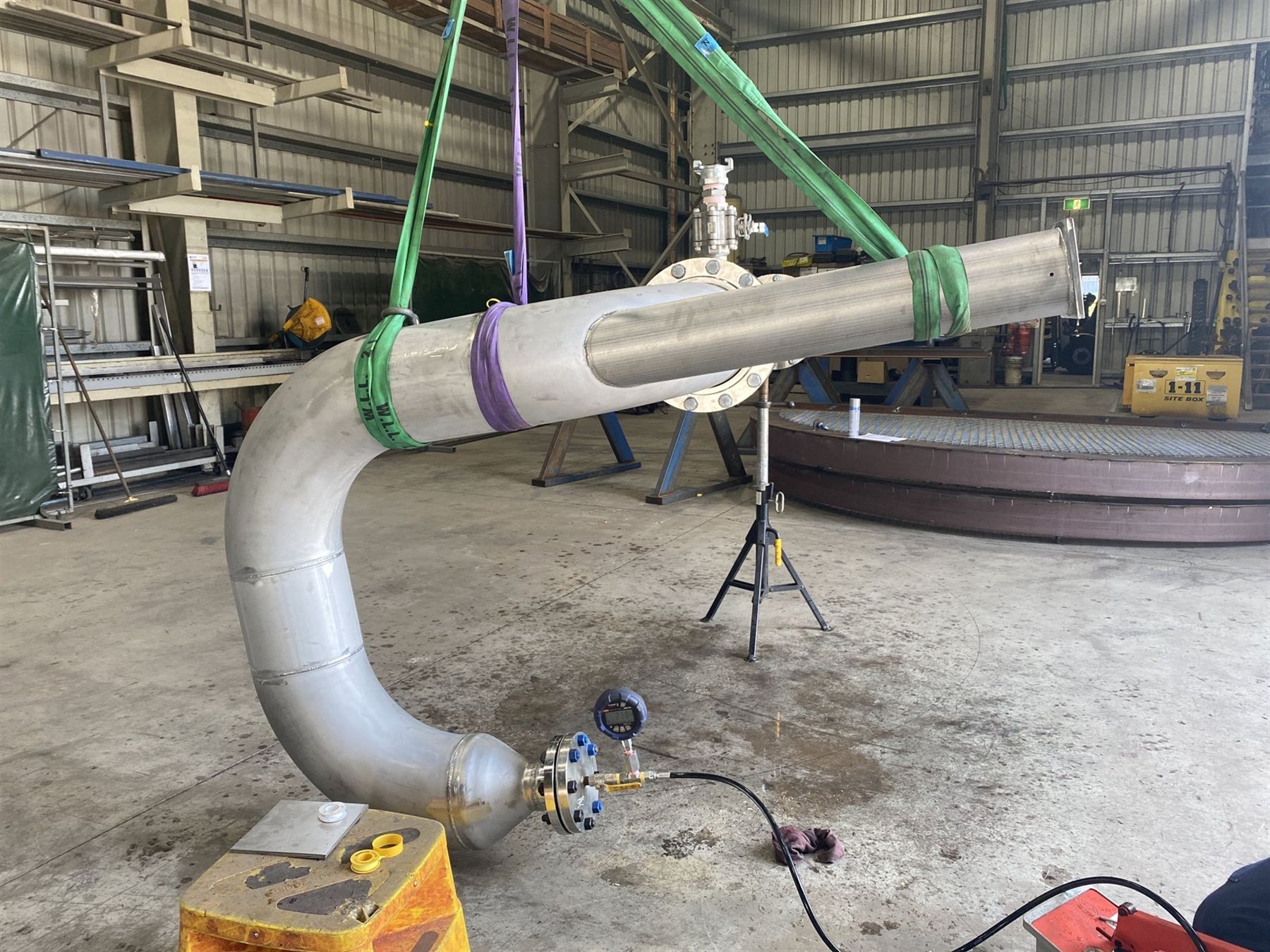
Hydrostatic pressure testing
Pressure tested. Logged to prove it.
NATA accredited hydrostatic testing of pipe spools, piping, fittings and pressure vessels, in our Darwin workshop or on site, from 0 to 100,000 kPa.
- NATA 0–100,000 kPa
- AS 4041
- AS 1210
- AS/NZS 3788
- ASME B31.3
- ASME VIII
- Pressure & temperature logged
NATA accredited · No. 12303
Tested to the code, inside our NATA scope.
A hydro test proves a new or repaired item holds its test pressure without leaking or deforming before it goes into service. Our NATA accreditation covers hydrostatic pressure testing of piping, pressure fittings and vessels from 0 to 100,000 kPa, to the codes below. Tests to other specifications run the same way and are reported without the NATA endorsement.
How a test runs
Filled, vented, raised in stages, held and logged.
- 01
Plan
Test pressure, stages and hold time from the code, the design and your ITP.
- 02
Fill & vent
Filled with water, air vented from the high points.
- 03
Raise
Pressure raised in stages, with a hold at each.
- 04
Hold & inspect
Held at test pressure while joints and welds are checked.
- 05
Release
Released in stages, drained, and the chart goes into the report.
Why water
Water barely compresses, so a hydro test stores far less energy than a pneumatic test at the same pressure.
Why vent the air
Trapped air stores energy and makes the pressure creep. Venting gives a safer test and a true reading.
Why log temperature
Water pressure follows its temperature during a hold. Logging both shows whether a drop is heat or a leak.
Logged, not just watched
Pressure and temperature, on one chart.
The logger records pressure and temperature from fill to release, not just a reading at the start and end. The chart goes in the report with the hold marked, so your QA has the evidence, not just a signature.
The code, design pressure and your ITP set the test pressure, stages and hold time.
Pumps, gauges and loggers
Pumped, gauged and logged.
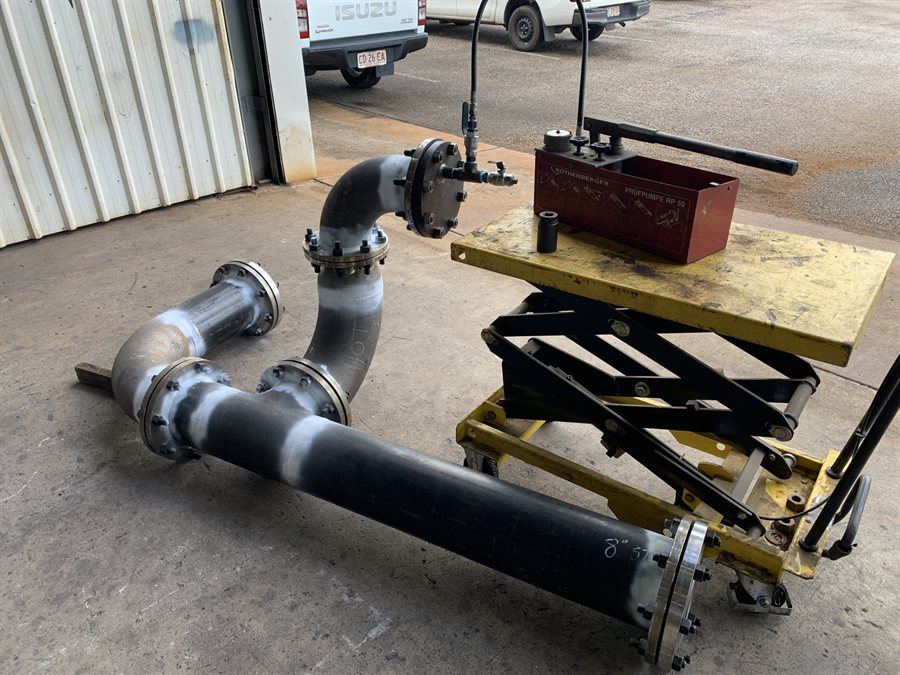
Small spools
Hand pumps
A slow, controlled rise and fine control at each hold, up to 100,000 kPa.
Large spools
3 × Haskel pumps
Air-driven pumps for large spools and vessels. They pump up to the set pressure, then hold it steady.
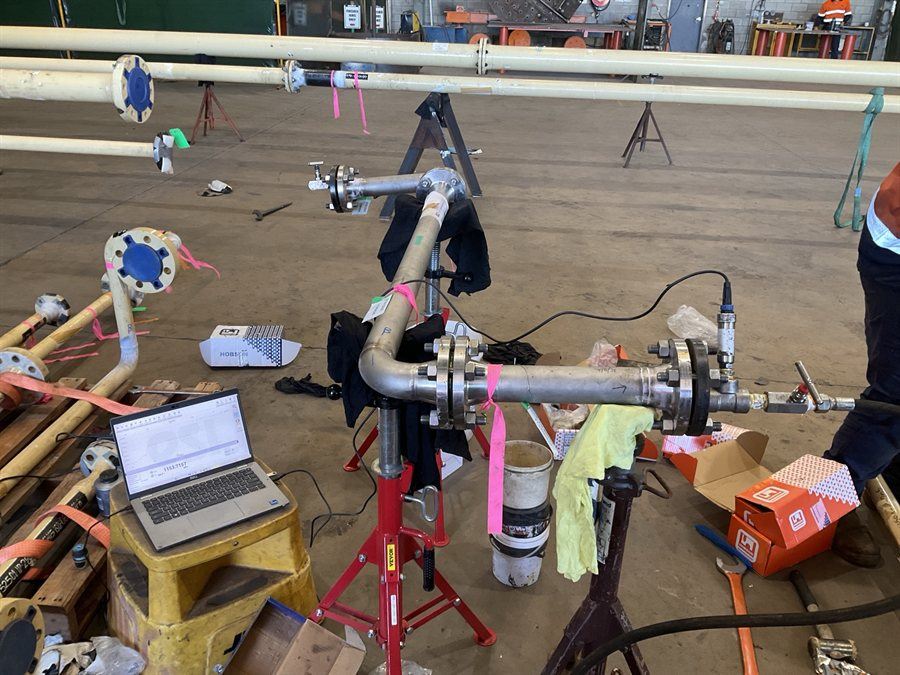
Every test
ESI loggers
ESI GD4200-USB, 0–100,000 kPa. Pressure and temperature logged for the whole test.
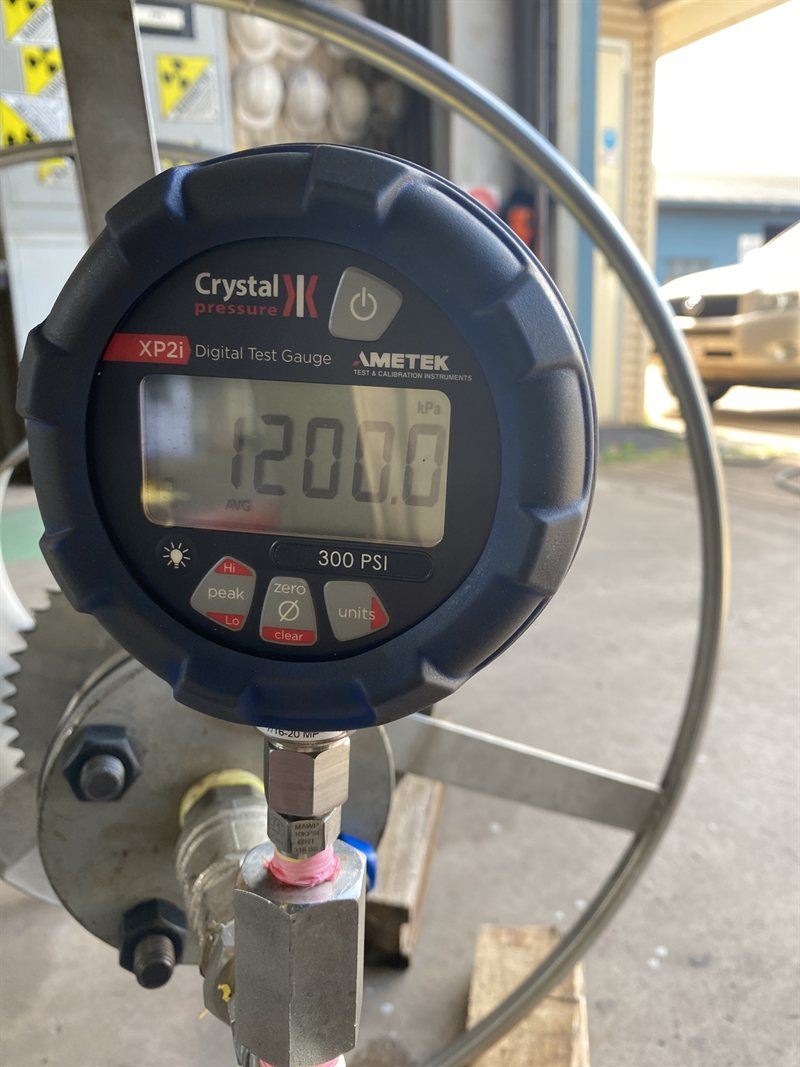
At the item
Calibrated test gauges
Every hydrostatic test is run on a calibrated gauge: Crystal XP2i digital gauges, fitted to the item under test.
What you get
A test report with the chart attached.
- A NATA-endorsed report for tests within our scope
- The logged pressure and temperature chart
- Item IDs, design and test pressure, hold and result
- Gauge and logger IDs, with the test gauge’s calibration details
- Photos of the set-up
What we need from you
Three things.
- Design pressure and code, or the test pressure
- Drawings or isometrics showing the test boundary
- On site: a water supply and a drain point
In our Darwin workshop
Bring spools, fittings and fabrications in, and they're tested and reported without tying up your yard.
On site, including remote
We take the pumps, gauges and loggers to installed piping and vessels, from Darwin to remote sites.
Relief valves on the same job? See PRV and PSV testing.
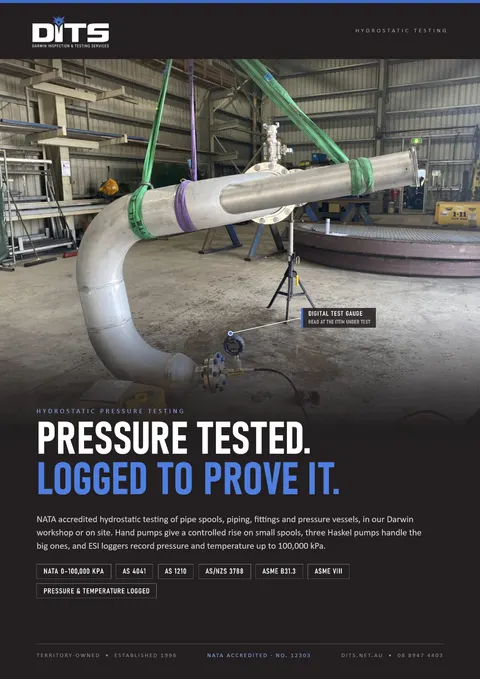
Brochure
Hydrostatic testing
NATA accredited to 100,000 kPa, in the workshop or on site.
4 pages · PDF 0.9 MB
Get in touch
Spools ready for a hydro test?
Swift reporting, round the clock.